E-commerce doesn’t lose money because of bad products—it loses money where customers can’t “try before they buy.” This problem is most severe in categories like fashion, footwear, eyewear, and beauty, where fit and appearance directly impact purchase decisions. When shoppers can’t see how an item looks or fits, they hesitate, abandon carts, or order multiple options with the intent to return. That uncertainty drives up return rates and cuts into profit. AI virtual try-on solves this by turning guesswork into confidence—making it not just a feature, but a powerful revenue optimization tool.
What Is AI Virtual Try-On?
AI virtual try-on is a technology that allows customers to see how a product looks on them before buying, using their photo or live camera. It recreates a realistic preview of fit, style, and appearance—without needing a physical fitting room.
From the user’s perspective, the experience is simple and intuitive. Shoppers can upload a photo or use their camera to instantly see how clothing, glasses, or makeup look on their own body or face. They can try different sizes, colors, or styles in seconds, helping them make faster and more confident decisions.
Behind the scenes, this experience is powered by a combination of technologies. Computer vision detects body shape or facial features, augmented reality overlays the product in real time, and AI models predict how the item will fit and appear. Together, these technologies turn online shopping into a more visual and interactive experience.
Types of Virtual Try-On
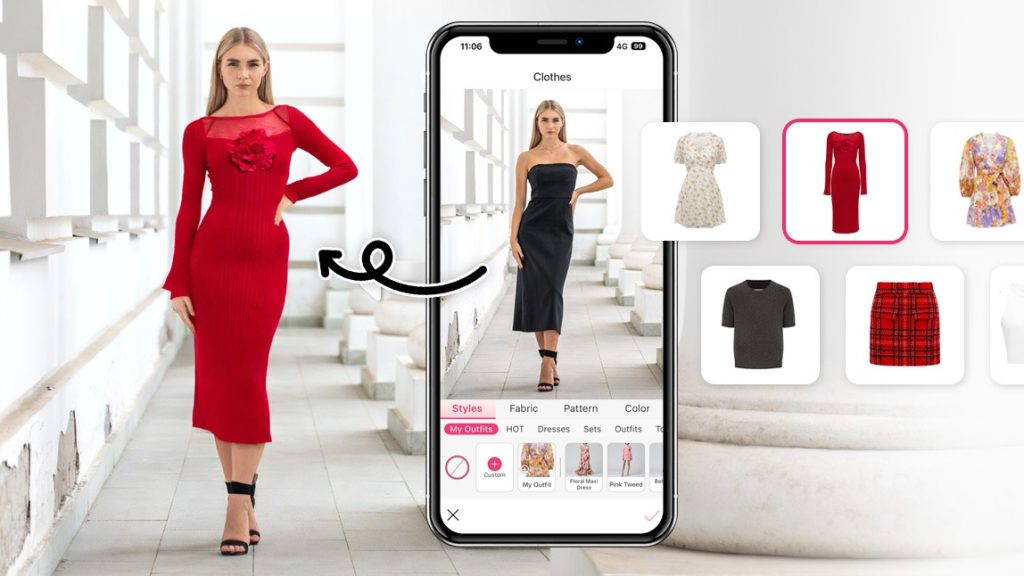
2D Overlay Try-On
This is the most basic form of virtual try-on. Clothing images are layered over a user’s photo or live camera feed. While it provides a quick preview, it may lack depth, realistic fitting, and accurate fabric behavior.
3D Virtual Fitting Rooms
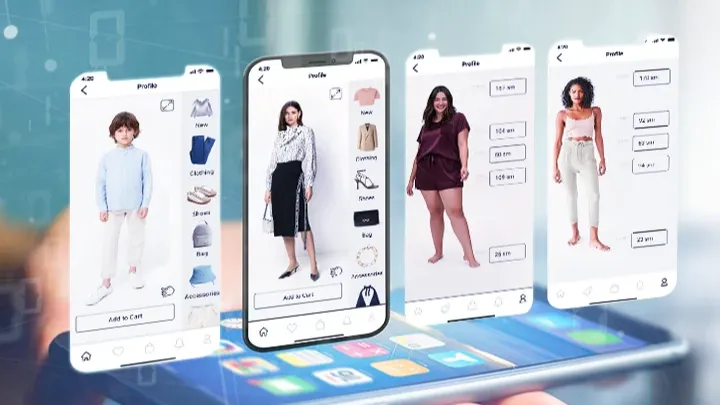
This approach uses 3D avatars that replicate the user’s body measurements. Garments are digitally simulated on the avatar, allowing for more accurate fit, movement, and fabric draping. It offers a highly immersive and realistic experience.
AR-Based Try-On (Mobile Apps & Smart Mirrors)
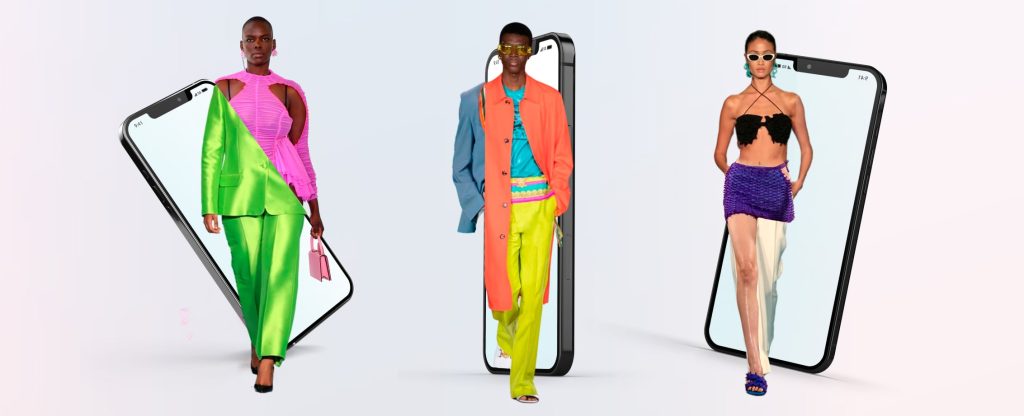
Augmented reality enables real-time try-on using a smartphone camera or in-store smart mirrors. Users can move, turn, and interact while seeing garments applied to their body instantly. This is one of the most engaging and widely adopted forms of virtual try-on today.
Where Virtual Try-On Matters Most
AI virtual try-on delivers the most value in product categories where customers rely heavily on fit and visual appearance to make a purchase decision. In these cases, uncertainty directly leads to hesitation, abandoned carts, and high return rates.
Fashion (Apparel)
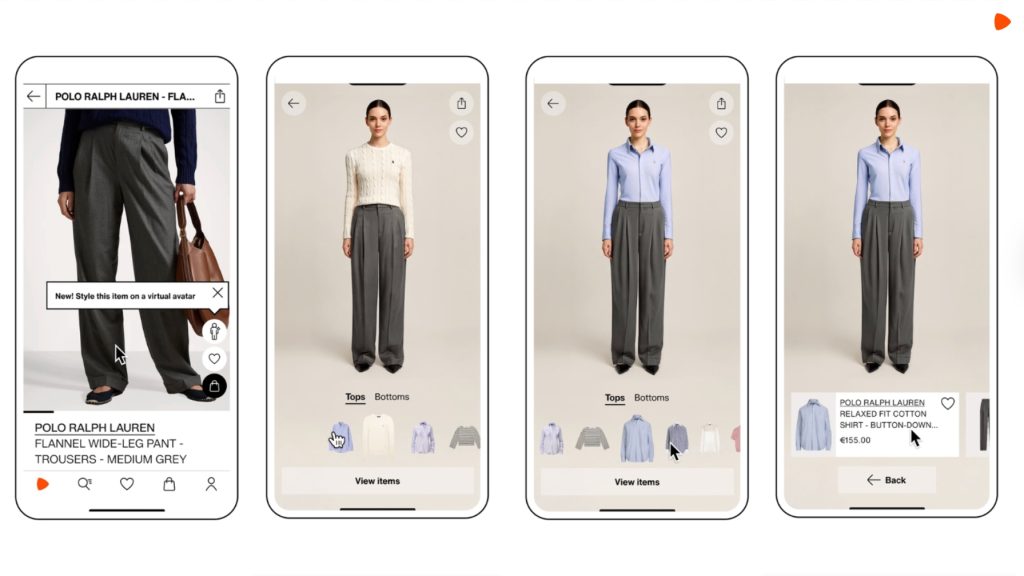
Clothing is the biggest use case for virtual try-on. Customers often struggle with sizing and fit, especially across different brands. Without trying items on, they’re unsure how a piece will look on their body, which leads to over-ordering or returns. This is why apparel consistently has some of the highest return rates in e-commerce.
Footwear
Shoe sizing is notoriously inconsistent, and comfort is difficult to judge online. Customers worry about whether shoes will fit properly or feel right when worn. Virtual try-on helps visualize how shoes look on the foot and, when combined with sizing AI, reduces uncertainty.
Eyewear
For glasses and sunglasses, appearance is everything. Customers want to know if a frame suits their face shape and personal style. Virtual try-on allows them to instantly see how different frames look, making the decision much easier.
Beauty (Makeup & Cosmetics)
Color accuracy is a major challenge in beauty e-commerce. Customers are unsure how shades will look on their skin tone. Virtual try-on enables real-time testing of products like lipstick or foundation, helping users find the right match.
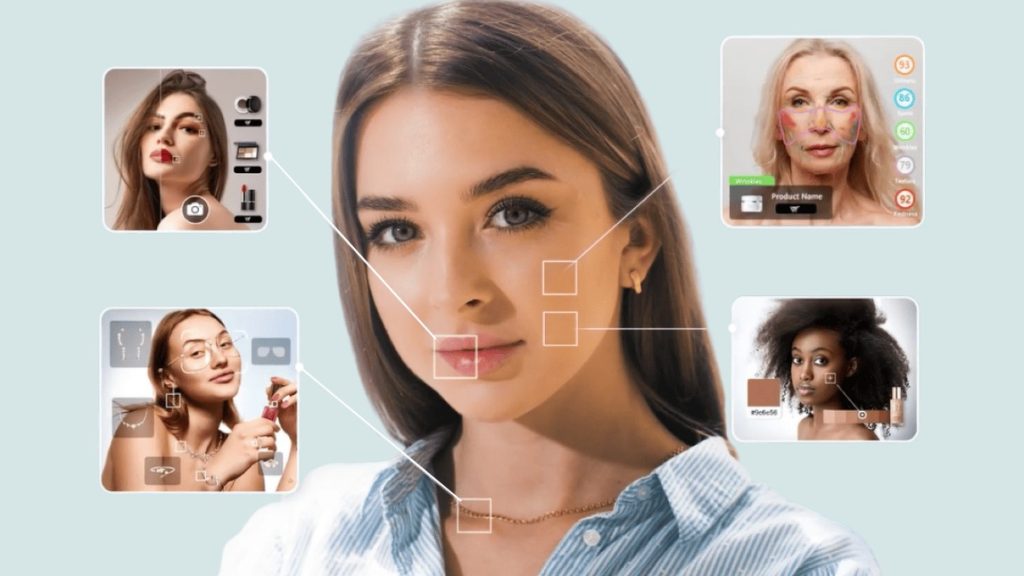
👉 Insight: Virtual try-on matters most in categories where fit and appearance directly influence buying decisions. The higher the uncertainty, the greater the impact on conversion, returns, and overall revenue.
The Core Problem in E-commerce
At its core, e-commerce struggles with one fundamental issue: customers can’t properly evaluate products before buying. Unlike physical stores, shoppers can’t touch, try, or experience items in real life. This gap creates uncertainty—and uncertainty directly impacts revenue.
When customers are unsure, three things happen:
- Low conversion rates → they hesitate and don’t complete the purchase
- High return rates → they buy “just to try” and send items back
- Cart abandonment → they leave before checking out
Each of these outcomes eats into profit from a different angle—lost sales, higher operational costs, and wasted acquisition spend.
👉 At a business level, it comes down to a simple formula:
Profit = Conversion + AOV – Returns
If customers can’t evaluate products confidently, conversion drops, returns increase, and overall profitability declines. This is exactly the gap that technologies like AI virtual try-on are designed to solve.
How AI Virtual Try-On Increases Sales, Reduces Returns, and Maximizes Profit
AI virtual try-on doesn’t just improve the shopping experience—it directly impacts the core revenue engine of e-commerce. By removing uncertainty at the exact moment customers make decisions, it influences how much they buy, how often they return, and whether they complete the purchase at all.
Instead of guessing, customers can see. And that single shift—from imagination to visualization—is where the money is made.
Increase Conversion Rate
In traditional e-commerce, hesitation is the silent killer of sales. Customers scroll, click, even add to cart—but stop short of purchasing because they’re unsure: Will this fit me? Will it look good on me?
AI virtual try-on removes that friction instantly.
By allowing customers to visualize products on themselves, it replaces doubt with confidence. The decision becomes easier, faster, and far more intuitive.
👉 What changes:
- Less second-guessing
- Faster decision-making
- Stronger emotional connection with the product
👉 Result: Conversion rates increase by 15–30%, turning more visitors into paying customers without increasing traffic.
Reduce Return Rates
Returns are one of the biggest hidden costs in e-commerce. Most returns don’t happen because of poor product quality—but because expectations don’t match reality.
Customers imagine one thing. The product delivers another.
AI virtual try-on closes that gap.
By showing a more accurate representation of fit, size, and appearance before purchase, it aligns expectations with reality—before the transaction even happens.
👉 What changes:
- Fewer size mismatches
- Better style expectations
- Less “buy-to-try” behavior
👉 Result: Return rates decrease by 20–25%, saving significant costs in reverse logistics, handling, and lost margins.
Increase Average Order Value (AOV)
Confidence doesn’t just increase the likelihood of buying—it increases how much customers are willing to buy.
When users can instantly try multiple products, they naturally explore more options. They don’t just buy a single item—they build a look.
AI virtual try-on enables:
- Trying different colors and variations
- Mixing and matching outfits
- Visualizing combinations in real time
👉 What changes:
- More products per session
- Higher engagement
- More complete purchases
👉 Result: Average order value increases by 10–20%, as customers add more items to their cart with confidence.
Upselling & Cross-selling
Traditional upselling relies on suggestions. AI virtual try-on turns those suggestions into visual experiences.
Instead of telling customers what to buy next, it shows them.
- A basic item becomes a premium upgrade
- A single product becomes a complete outfit
- A simple purchase becomes a styled bundle
👉 What changes:
- Higher acceptance of premium options
- Stronger product discovery
- More effective cross-selling
👉 Result: Revenue per customer increases, especially through higher-margin products and bundled purchases.
Reduce Cart Abandonment
Cart abandonment often happens at the final moment—when doubt creeps back in.
Even after adding items to cart, customers hesitate:
- “Will this actually fit?”
- “What if it doesn’t look good?”
AI virtual try-on eliminates that last layer of uncertainty.
By giving customers a clear, visual confirmation of their choice, it reinforces confidence right before checkout.
👉 What changes:
- Less hesitation at checkout
- Faster buying decisions
- Reduced friction in the purchase journey
👉 Result: More completed purchases and a shorter path from browsing to buying.
Read more: Cut Returns by 30–50%: AI Size Recommendation for Online Fashion Stores
Real-World Applications of Virtual Try-On Fashion
To truly understand the impact of virtual try-on fashion, it’s best to look at how it performs in real-world scenarios—where measurable business results and user behavior changes are clearly visible.
Online Clothing Stores (Try Before You Buy)
Scenario:
An e-commerce fashion retailer integrates a virtual try-on feature into its product pages. When users browse items, they can upload a photo or use their camera to see how a dress or outfit looks on their own body. The system also suggests the best size based on body measurements and past purchases.
What Happens:
- Users spend more time interacting with products (trying multiple outfits virtually)
- They feel more confident about fit and appearance before purchasing
- Fewer “guess-based” purchases
Results:
- Conversion rate increases by 20–40% due to higher buyer confidence
- Return rates drop by 15–30%, especially for size-related issues
- Average order value (AOV) increases as users are more willing to buy multiple items
Beauty and Accessories (Glasses, Makeup, Jewelry)
Scenario:
A beauty brand offers AR-based virtual try-on through its mobile app. Users can test different lipstick shades, foundation tones, sunglasses, or earrings using their smartphone camera in real time.
What Happens:
- Customers instantly compare multiple styles or colors without visiting a store
- They discover products they wouldn’t normally consider
- Decision-making becomes faster and more enjoyable
Results:
- Engagement rate increases significantly (users try 5–10 products per session)
- Conversion rates improve by 25–35% for try-on-enabled products
- Return rates decrease, especially for cosmetics where color mismatch is common
Luxury Fashion Brands Offering Immersive Experiences
Scenario:
A luxury fashion brand launches a 3D virtual fitting experience where users create a high-fidelity avatar based on their body scan. Customers can explore collections, try outfits in a virtual showroom, and view garments with realistic fabric movement.
What Happens:
- Customers experience the brand in a premium, interactive environment
- They build a stronger emotional connection with products
- The shopping journey becomes more like a personalized showroom visit
Results:
- Higher customer retention and brand loyalty
- Increased purchase intent for high-value items
- Reduction in costly returns for premium products
- Enhanced brand positioning as innovative and tech-forward
Social Commerce and Influencer Marketing
Scenario:
An influencer promotes a clothing collection on social media with a “Try This Look” feature. Followers can click a link, upload their photo, and instantly see themselves wearing the influencer’s outfit.
What Happens:
- Followers actively engage instead of passively viewing content
- The gap between inspiration and purchase is significantly reduced
- Viral sharing increases as users post their own try-on results
Results:
- Click-through rates (CTR) increase by 2–3x compared to standard posts
- Higher conversion rates due to interactive product discovery
- User-generated content boosts organic reach and brand awareness
- Faster purchase decisions driven by social proof and personalization.
Read more: Outfit Recommendation: How AI Suggests Outfits Based on Personal Style
How to Get Started with Virtual Try-On Fashion (Tools & Practical Steps for Retailers)
If you’re a fashion retailer looking to adopt virtual try-on fashion, the key is to start simple, test quickly, and scale based on results. Here’s a practical guide on where to begin and which tools you can explore:
Start with Ready-to-Use Virtual Try-On Platforms
Instead of building from scratch, most businesses begin with existing solutions that can be integrated into e-commerce websites.
Popular tools to explore:
- Zyler – Virtual try-on for clothing using user photos
- Fashwell (by Zalando) – AI-based visual recognition and styling
- Vue.ai – End-to-end AI platform including virtual try-on and recommendations
- 3DLOOK – Body measurement and size recommendation using smartphone scans
👉 Best for: Small to mid-sized retailers who want fast implementation with minimal technical effort
Use AR SDKs for Custom Experiences
If you want more control over branding and user experience, consider integrating AR SDKs into your mobile app or website.
Tools & SDKs:
- Banuba AR SDK – Real-time AR try-on (clothing, accessories, beauty)
- DeepAR – Lightweight AR for mobile apps
- Snap AR (Lens Studio) – Great for social commerce and marketing campaigns
👉 Best for: Brands with a tech team or working with development partners
Integrate with E-commerce Platforms
Many virtual try-on tools offer plugins or APIs that integrate with platforms like:
- Shopify
- WooCommerce
- Magento
This allows you to add try-on features directly to product pages without rebuilding your entire system.
👉 Tip: Start with a few high-traffic or high-return products to test performance before scaling
Prepare Your Product Data
Virtual try-on works best when your product data is clean and structured.
What you need:
- High-quality product images (multiple angles)
- Size charts and measurement data
- (Optional) 3D garment models for advanced simulation
👉 Tip: The better your data, the more accurate and realistic the try-on experience
Combine with Size Recommendation Tools
If full virtual try-on feels too complex initially, you can start with AI size recommendation tools.
Examples:
- Fit Finder solutions
- AI sizing plugins based on user input
👉 This is often the fastest way to reduce return rates before moving to full visual try-on
Test, Measure, and Optimize
Start small, then scale based on performance.
Key metrics to track:
- Conversion rate
- Return rate
- Time spent on product pages
- Engagement with try-on feature
👉 Many retailers see measurable improvements within weeks of implementation.
Conclusion
Virtual try-on fashion is rapidly transforming the way consumers shop online by bridging the gap between digital and physical experiences. Powered by AI, it not only enhances visualization and personalization but also delivers tangible business results—higher conversions, lower returns, and stronger customer engagement. As technology continues to evolve, virtual try-on is set to become a standard feature in fashion e-commerce, giving early adopters a clear competitive advantage in an increasingly experience-driven market.
FAQ
Yes. AI virtual try-on improves purchase confidence by letting customers see how products look and fit before buying. This reduces hesitation and leads to higher conversion rates, larger basket sizes, and more completed purchases.
Accuracy depends on the technology used. Modern AI virtual try-on solutions can deliver highly realistic visualizations, especially for categories like eyewear and beauty. For apparel, accuracy continues to improve with better body mapping and fit prediction, though it may not be perfect in all cases.
It depends on the approach. Many SaaS solutions and plugins make virtual try-on accessible without heavy upfront costs, making it feasible for mid-sized and even smaller brands. Custom-built solutions offer higher accuracy but require a larger investment.
Yes. Most modern virtual try-on solutions are designed for mobile-first experiences, using smartphone cameras for real-time try-on. Since a large portion of e-commerce traffic comes from mobile devices, this is a critical capability.
Absolutely. With the rise of SaaS tools and integrations (especially for platforms like Shopify), small and growing brands can implement virtual try-on without complex development. It’s becoming increasingly accessible as a competitive advantage, not just an enterprise feature.
